
UFLA STUDENTS TRAIN IN A RISK AREA WITH PM RESCUERS FROM RIO DE JANEIRO
The university's first tactical prehospital care course brought about 100 Medicine and other health students together for two days of classes, smoke and severe bleeding simulations
Automatically translated from Portuguese. Read the original in Portuguese
About 100 students from the Federal University of Lavras (Universidade Federal de Lavras, UFLA) spent two days learning how to rescue injured people in places where the danger is not over yet. It was the first tactical prehospital care course held at the university, with ten hours of training split between theory and practice.
The class brought together students from Medicine and other health fields. The instructors were military police officers from the Special Rescue and Search Operations Group (Grupamento Especializado de Salvamento e Ações de Resgate, GESAR) of the Military Police of the State of Rio de Janeiro (Polícia Militar do Estado do Rio de Janeiro).
Rádio Cultura at the Department of Medicine (Departamento de Medicina)
Rádio Cultura de Lavras visited the Department of Medicine at UFLA. Journalist Frederico Mesquita spoke with Professor Giancarla Botelho Santos, of the School of Health Sciences (Faculdade de Ciências da Saúde) at UFLA, who invited GESAR members to teach the course in Lavras, and with rescuers from the group of the Military Police of the State of Rio de Janeiro.
Rescue With the Risk Still Nearby
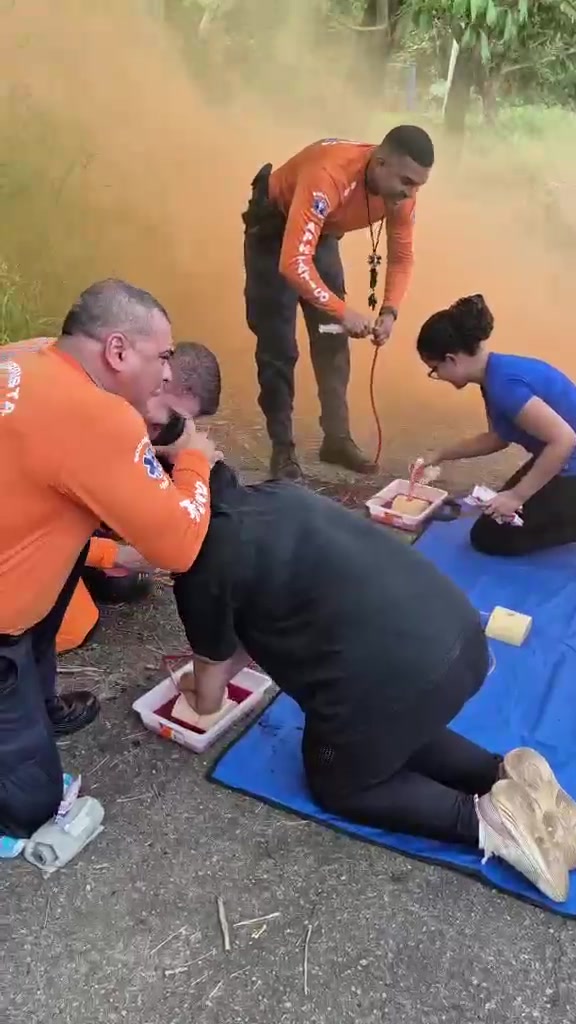
Tactical prehospital care is the first aid given when the site still poses a risk. During the drills, students practiced three decisions: whether it is safe to get close to the victim, which injuries need immediate attention, and how to divide the work within the team.
Training videos show students crawling across the court to the simulated victims and, outside, treating injured people on the ground with orange smoke around them, as in a real emergency.
Workshop on Severe Bleeding
The program included a Stop the Bleed workshop, an international program that teaches how to recognize and control severe bleeding. In the simulations, students pressed on wounds on training dummies while instructors corrected their hand position and the amount of pressure applied.
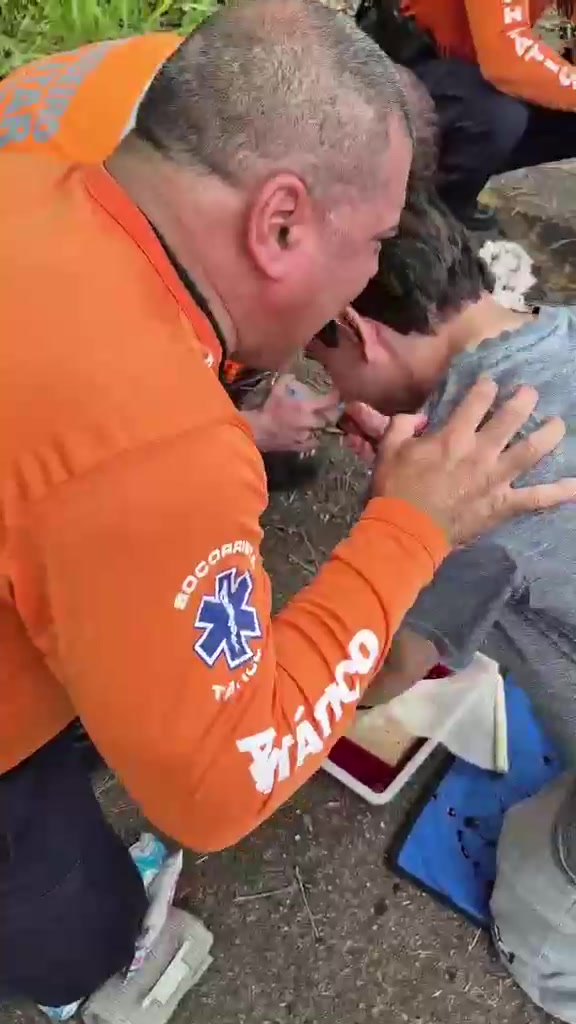
There was also an equipment demonstration. At the end of each exercise, the teams discussed what had worked and what needed improvement.
Who the Instructors Are
GESAR was created in 1995 to provide first aid to police officers injured in operations. Today the group also works in rescues and in training rescuers.
The course was organized by the Academic League of Emergency and Urgent Care (Liga Acadêmica de Urgência e Emergência, LAMU), linked to the UFLA Department of Medicine. The course content will also be taken to the outreach activities in which the league teaches first aid to the Lavras community.
0001403 · 03211126